A room where untold stories begin to speak. Virginia Damtsa reflects on the opening of Her Stories Untold, where nine artists bring overlooked histories into view, and an evening of art becomes a conversation about visibility, memory and who gets to be remembered.
Her Stories Untold: Opening Night Reflections
By Virginia Damtsa, Director of Visual Art
An exhibition opening is often imagined as a moment of celebration. The speeches are prepared, the artworks are installed, the guests arrive, and the room fills with conversation. Yet for me, the hours before an opening are always accompanied by a particular kind of nervousness. People often assume I worry most about attendance numbers, sales, or public reception. In reality, what concerns me most is something far simpler: the artists.
Once the doors open, the exhibition no longer belongs to me. It belongs to the artists who entrusted their work to the walls, and I find myself watching their reactions closely, hoping they recognise the conversations created between the works and feel that their art has been understood and given the space it deserves. Artists are, after all, my most important audience and often my biggest critics. They are the catalysts of everything we do. Without their vision, there is no exhibition.
With Her Stories Untold, those feelings were amplified bringing together thirty artworks by nine international artists. Each with distinct practices, perspectives, and experiences. The exhibition began with a simple question: whose stories do we remember, and whose stories have been left out?
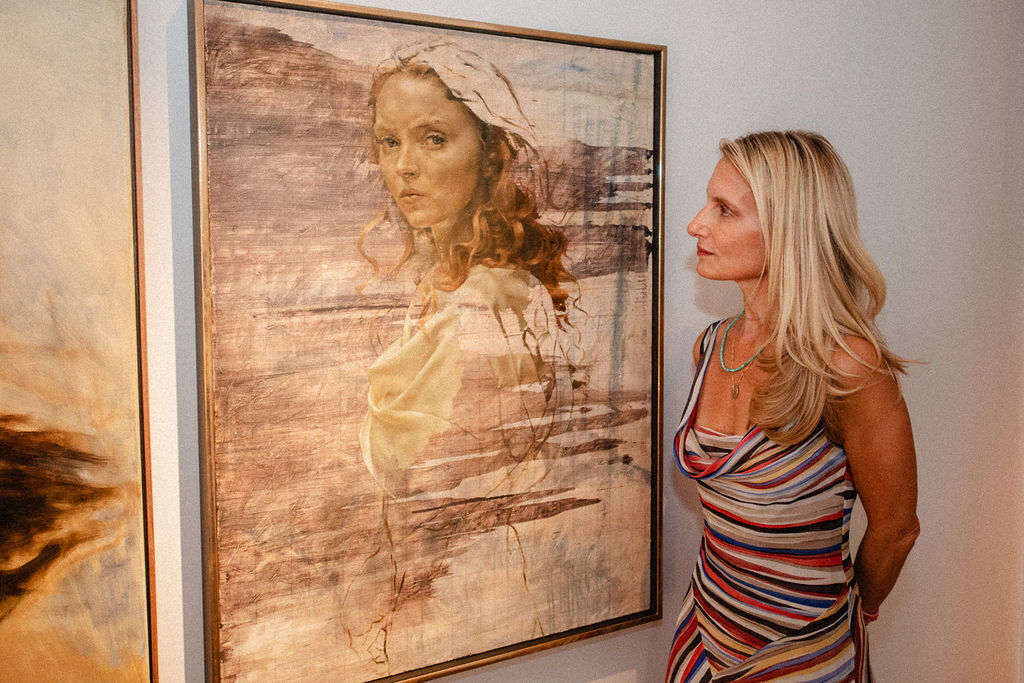
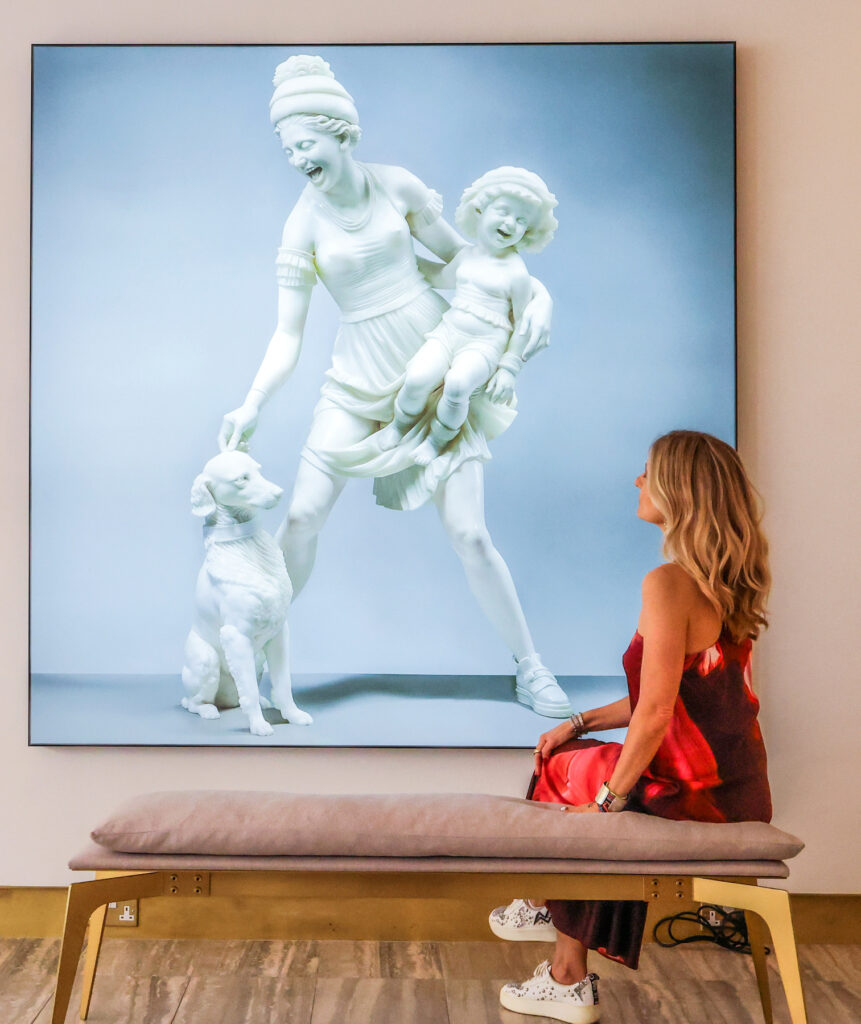
Virginia Damtsa observing Jonathan Yeo’s ‘Lily Cole As Helen of Troy’
The Stories History Left Untold
For centuries, art history was largely written by men. Women appeared in art, but far less often as protagonists of their own narratives. While this has changed significantly since the 1970s, many remarkable stories, achievements, and perspectives remain underrepresented, unheard, or forgotten. This exhibition seeks to create a dialogue around visibility, representation, resilience, identity, and the many ways women have shaped culture, history, and society.
The works in the exhibition offer different answers to these questions. Jonathan Yeo’s portrait of Malala Yousafzai presents a young woman whose quiet dignity speaks more powerfully than any depiction of suffering. Painted only a year after the attack that sought to silence her, the portrait reminds us that resilience is not always loud; sometimes it appears as quiet strength.
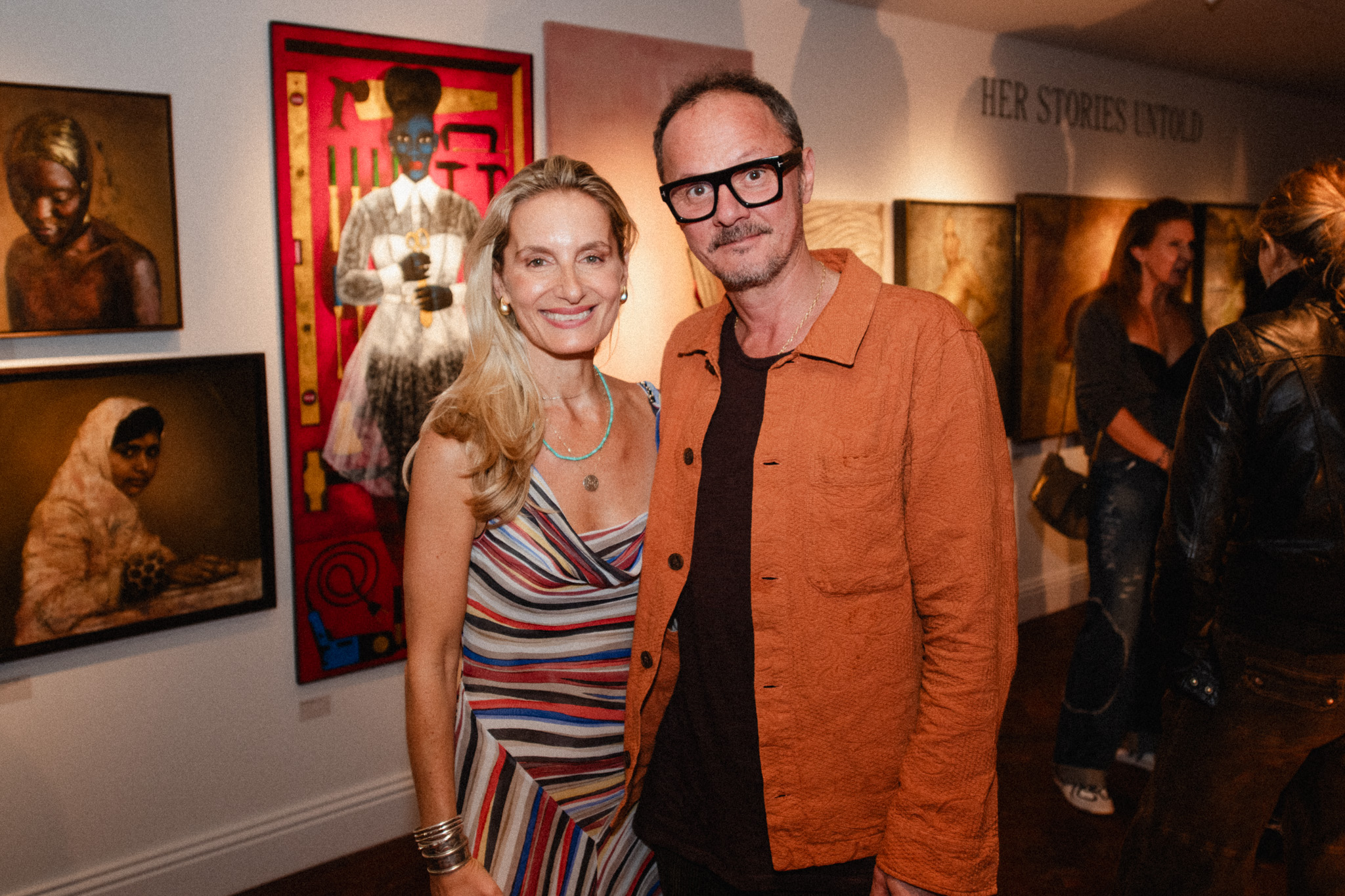
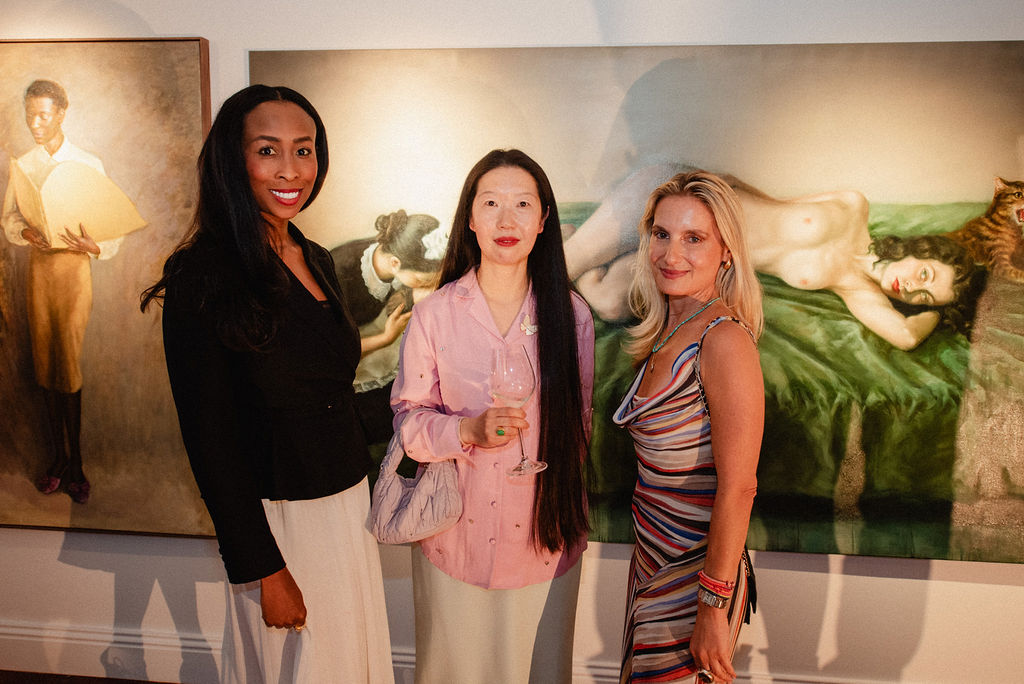
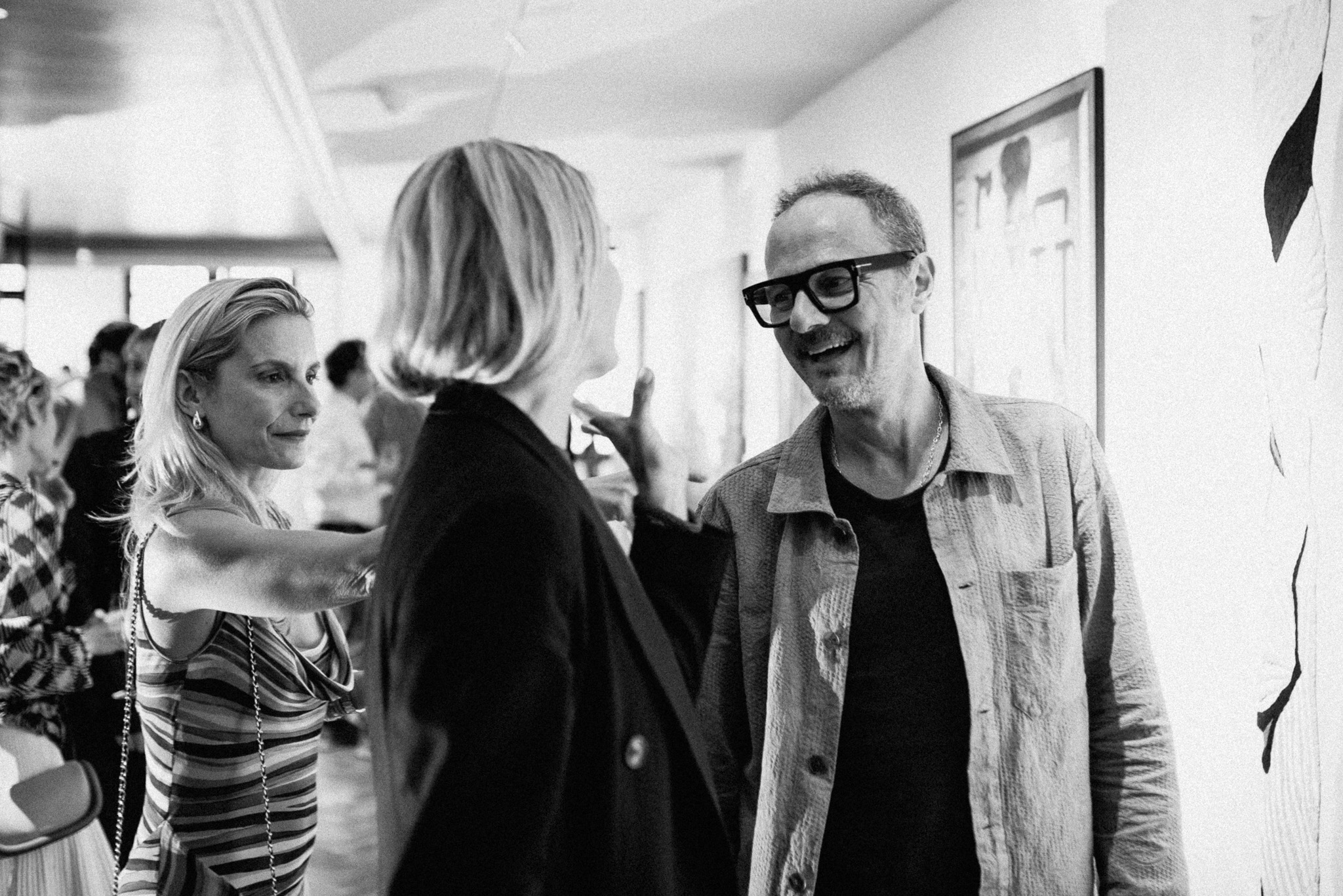
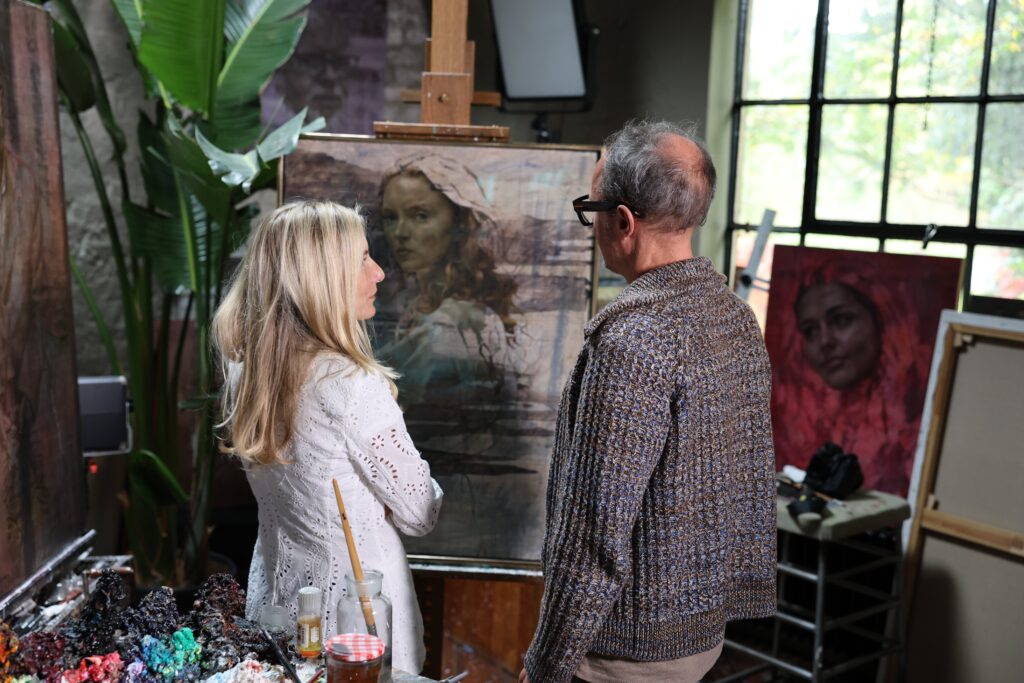
Anne Welsh, Wen Wu and Virginia Damtsa
Elsewhere, Wen Wu’s deeply personal work challenges historical perceptions of female vulnerability, inviting us to reconsider how women have been represented during moments of emotional intensity. Abe Odedina’s powerful portrayals of Nigerian women celebrate strength, agency, and presence, while Rebecca Fontaine-Wolf’s works reveal emotional landscapes that are at once deeply personal and universally recognisable.
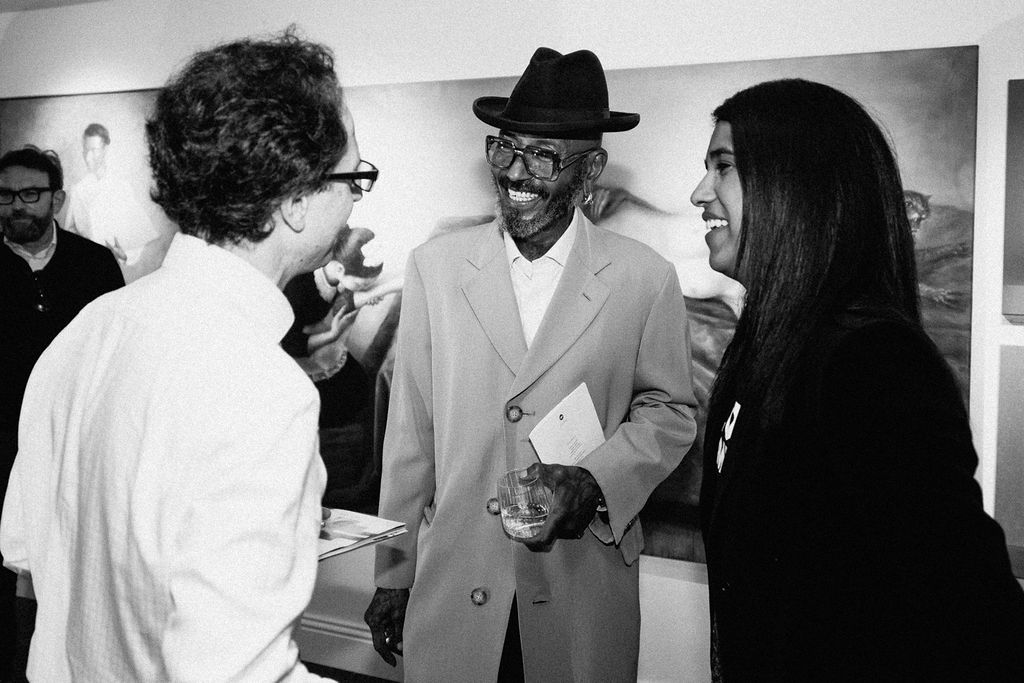
Abe Odedina in conversation withRaakhi Shah
A Room Full of Conversation
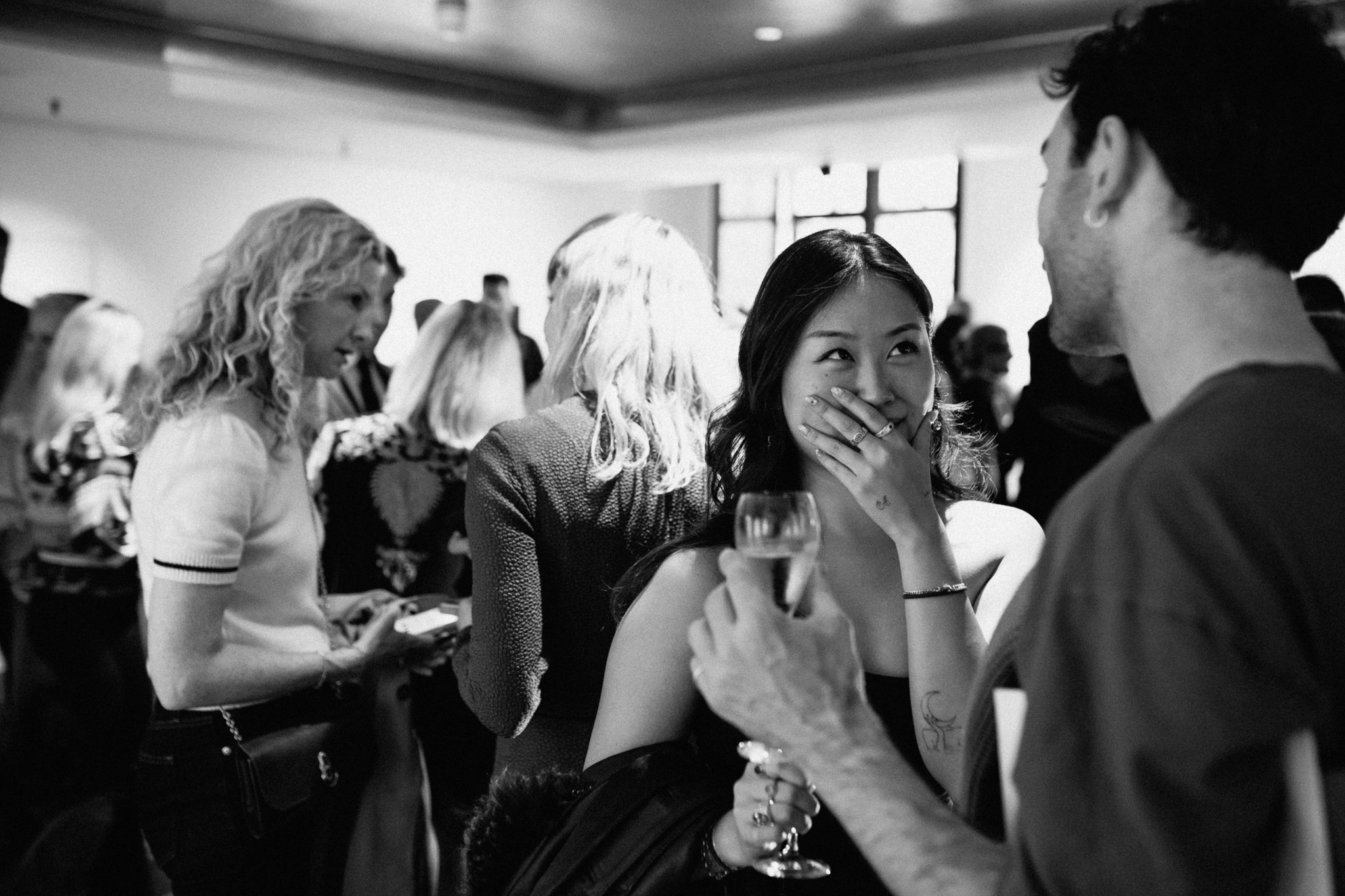
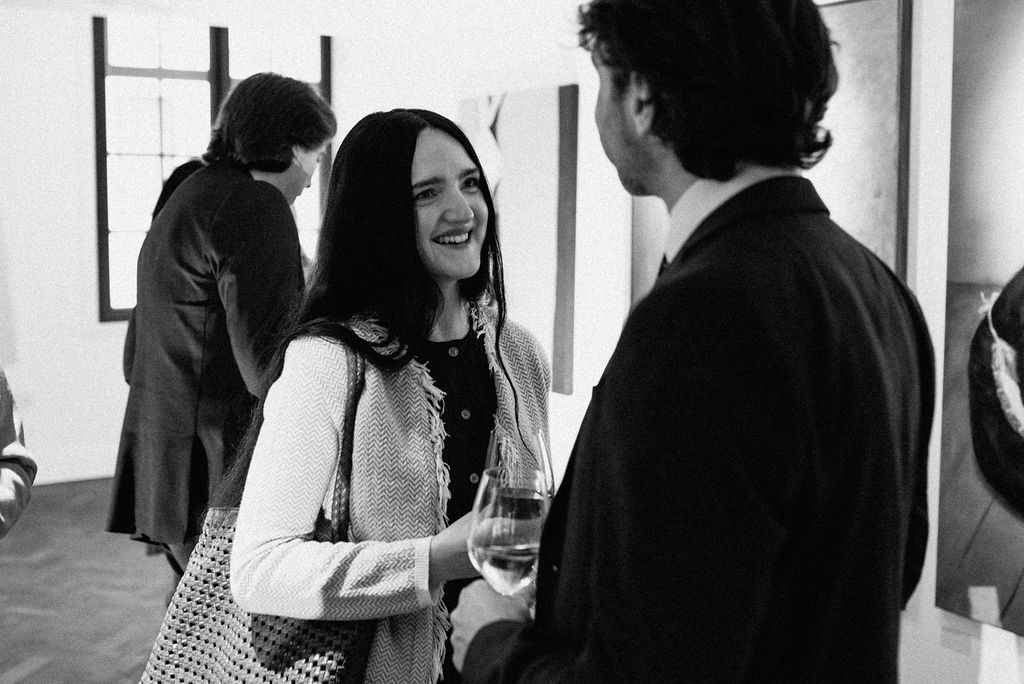
As guests moved through the galleries on opening night, these stories began to connect with new audiences. Yet throughout the evening, I found myself returning to the artists.
Fortunately, as the evening unfolded, the answer appeared to be yes. The room was full. Conversations flowed. Artists, collectors, supporters, and visitors engaged deeply with the works and with one another. Most importantly, the artists seemed genuinely happy. The congratulations that followed were not simply compliments; they felt like a shared acknowledgement that the exhibition had achieved what it set out to do. That, more than anything else, is how I measure success.
Perhaps that sense of connection is also why the exhibition felt so at home at Town Hall. Historically, salons were spaces where ideas were exchanged, debated, challenged, and refined through conversation. Town Hall’s new Salon carries that spirit forward. It is not just a room in which art is displayed. It is a space where art can generate dialogue across disciplines, generations, and perspectives.
Throughout the evening, the Salon became exactly that: a place where artists, collectors, supporters, and visitors exchanged ideas, shared experiences, and engaged with the stories on the walls. In a time when so much is consumed quickly, spaces dedicated to thoughtful conversation feel increasingly important. Town Hall’s commitment to creating those encounters makes it more than a venue; it becomes part of the cultural conversation itself.
Poppy De Havilland
Beyond a Single Evening
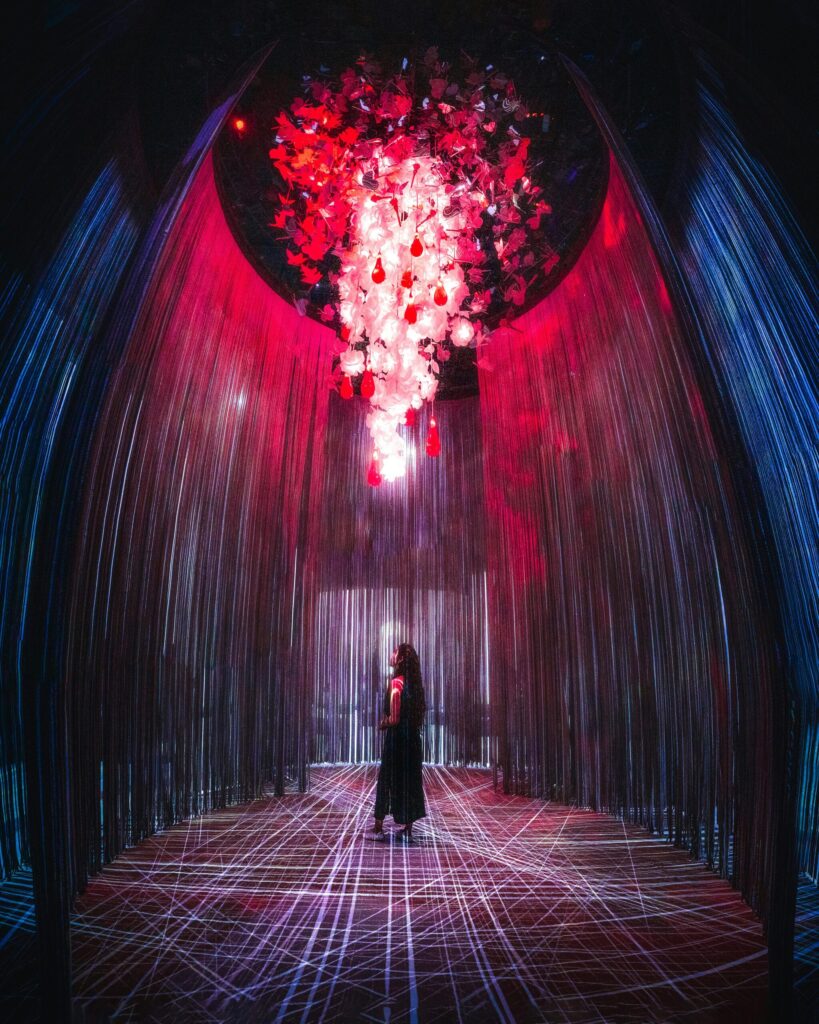
I am deeply grateful to the nine artists whose generosity, trust, and talent made Her Stories Untold possible: Poppy De Havilland, Carolina Mazzolari, Abe Odedina, Bonolo Kavula, Conrad Shawcross, Wen Wu, Jonathan Yeo, Rebecca Fontaine-Wolf, Richard Wathen, and all those who contributed to bringing these stories to life.
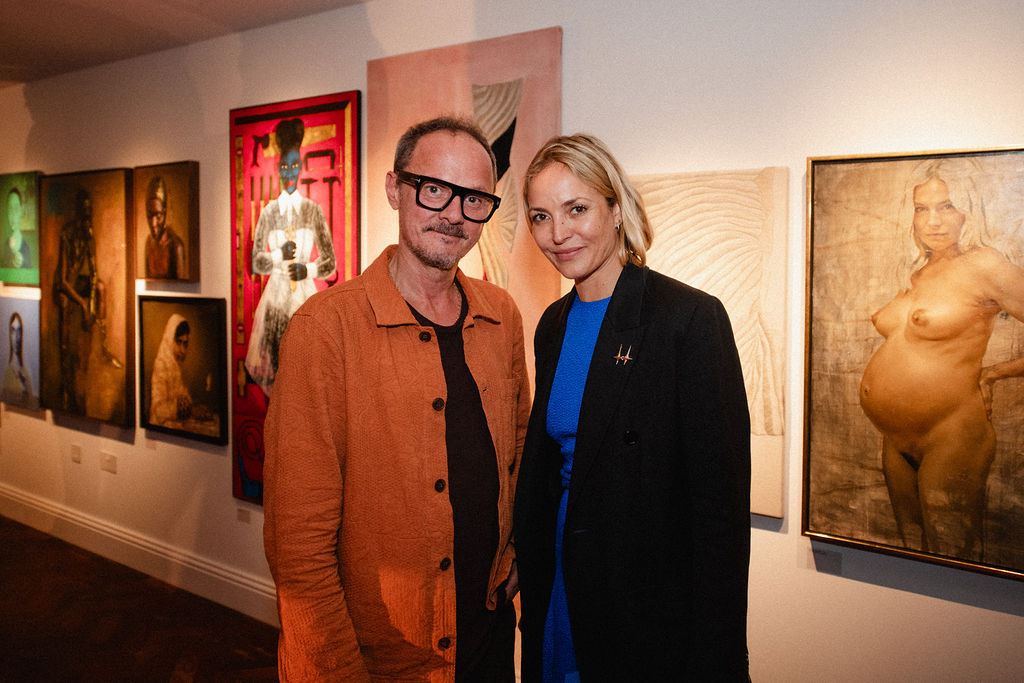
Jonathan Yeo and Carolina Mazzolari
We are also proud to have partnered with The Circle, founded by Annie Lennox, whose work continues to champion women’s rights and empowerment around the world.
An exhibition opening lasts only one evening, but the conversations it begins can continue far beyond it. My hope is that Her Stories Untold encourages visitors not only to look closely at these works, but also to reflect on the stories they tell — and on the many stories that history has yet to fully hear.
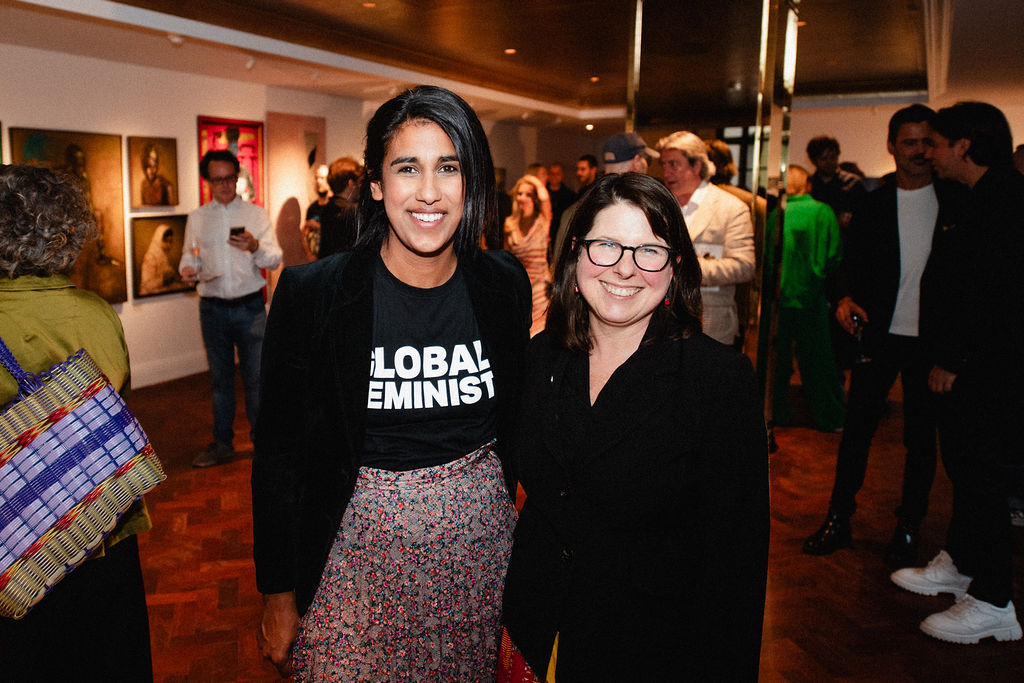
Raakhi Shah, CEO of The Circle
Looking back on opening night, I remember the nerves. But I remember something else more clearly: a room full of conversation, artists engaging with their work and with one another, and stories finding new audiences. Most importantly, I remember artists who felt seen, respected, and proud of what they had created. In the end, that was the moment that mattered most.
Virginia Damtsa, Carolina Mazzolari and Jonathan Yeo in conversation
More articles
where culture and creativity collide
Editorial
Curating Her Stories Untold: Art, Activism, and Womanhood