Curating The Light Eaters: Art, Perception and the Mind
Light is only the beginning. Ahead of The Light Eaters, co-curator Virginia Damtsa reflects on artists who interfere with the machinery of perception, and on why, amid the rush of Frieze week, an exhibition might ask us to slow down and notice what it means to be here, seeing at all.
Curating The Light Eaters: Art, Perception and the Mind
By Virginia Damtsa, Director of Arts
The Light Eaters starts with light, but it ends somewhere much deeper: with the question of what it means to be conscious.
Light is the first condition of seeing, yet we rarely think about the extraordinary fact that we do not actually experience the world directly — we experience it through a nervous system, through perception, memory, emotion and interpretation. So the exhibition became an exploration of that space between what is physically there and what the mind constructs from it.
Mollie Dent-Brocklehurst and I wanted to bring together artists who don’t simply use light, but who make us question what seeing is, where perception begins and ends, and whether consciousness itself can be shifted through sensory experience. This is where art becomes almost a form of enquiry:
neuroscience can describe aspects of perception, but art can make us feel the problem from the inside.
Seeing Ourselves See
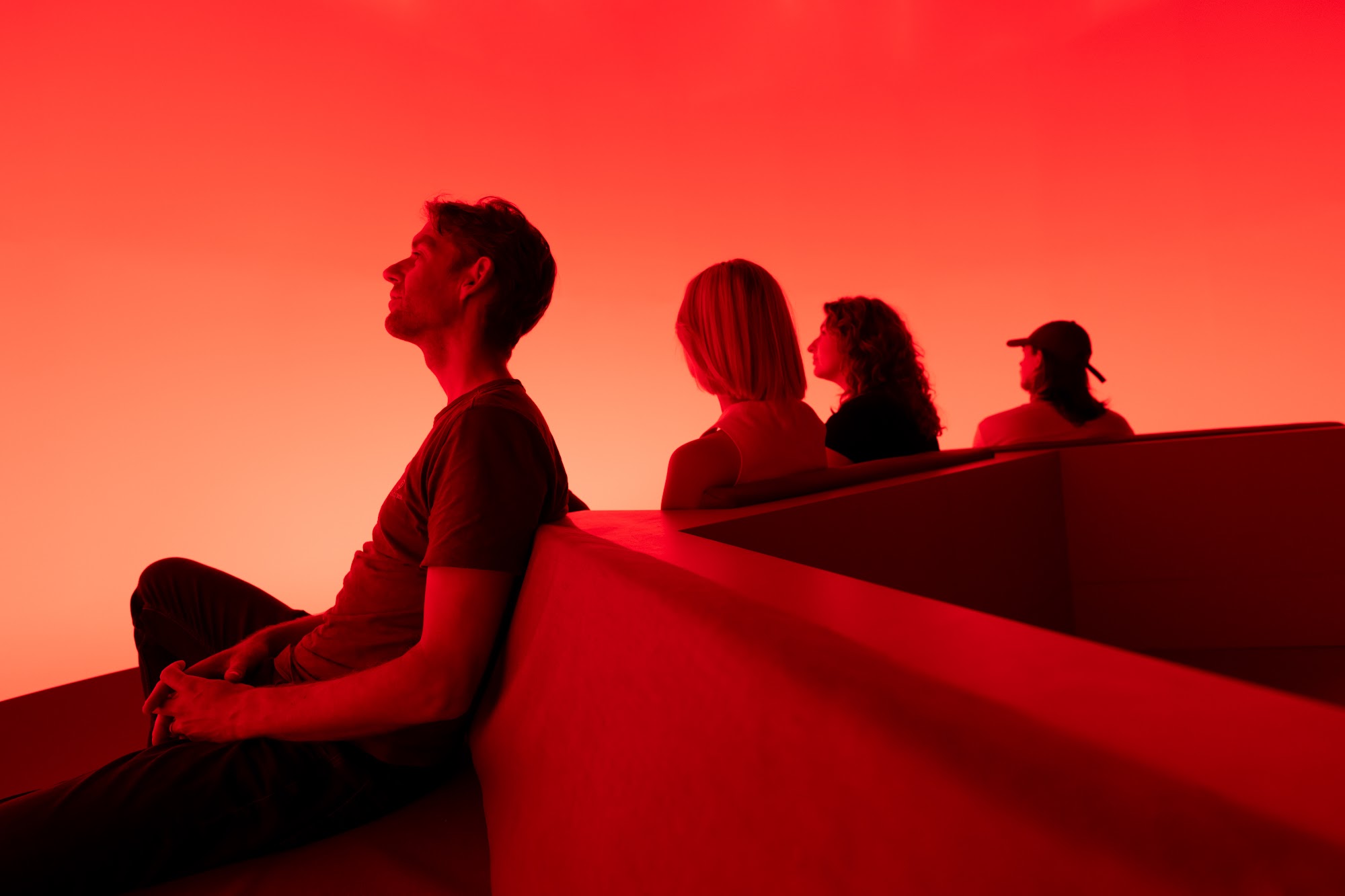
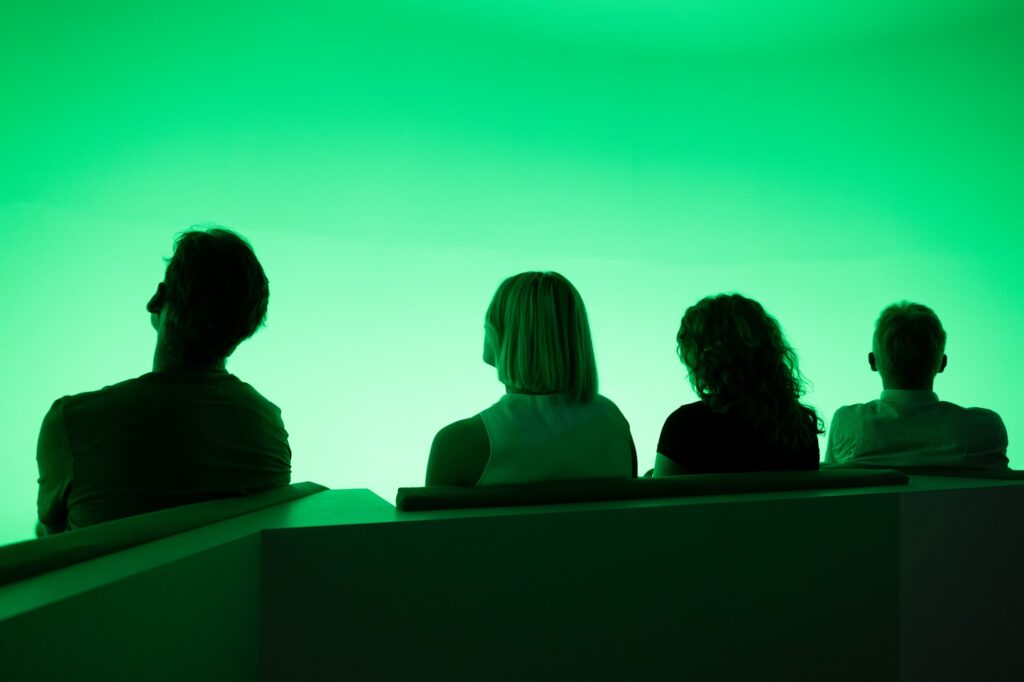
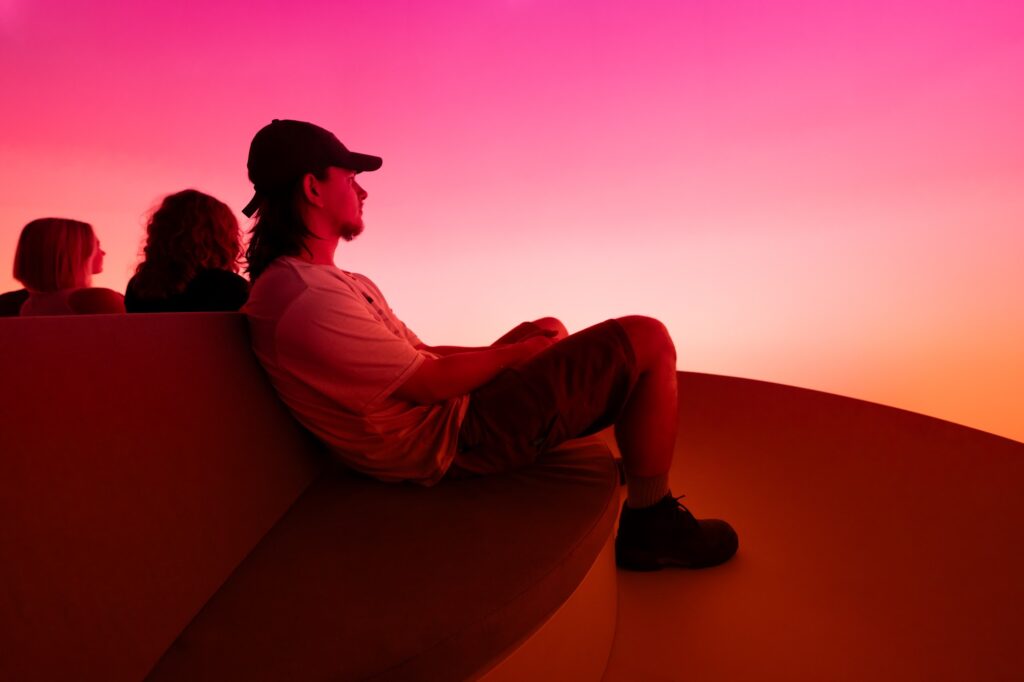
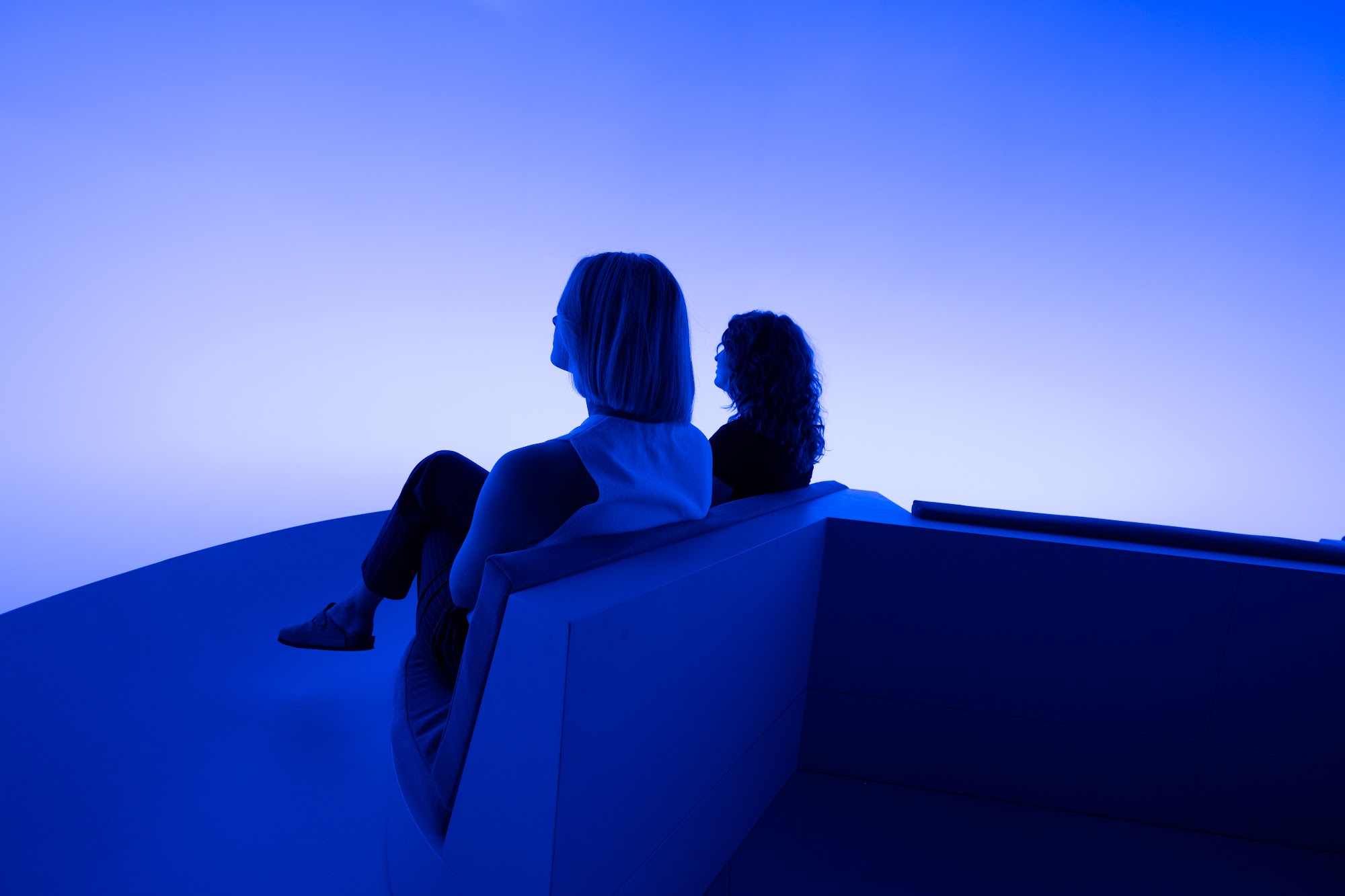
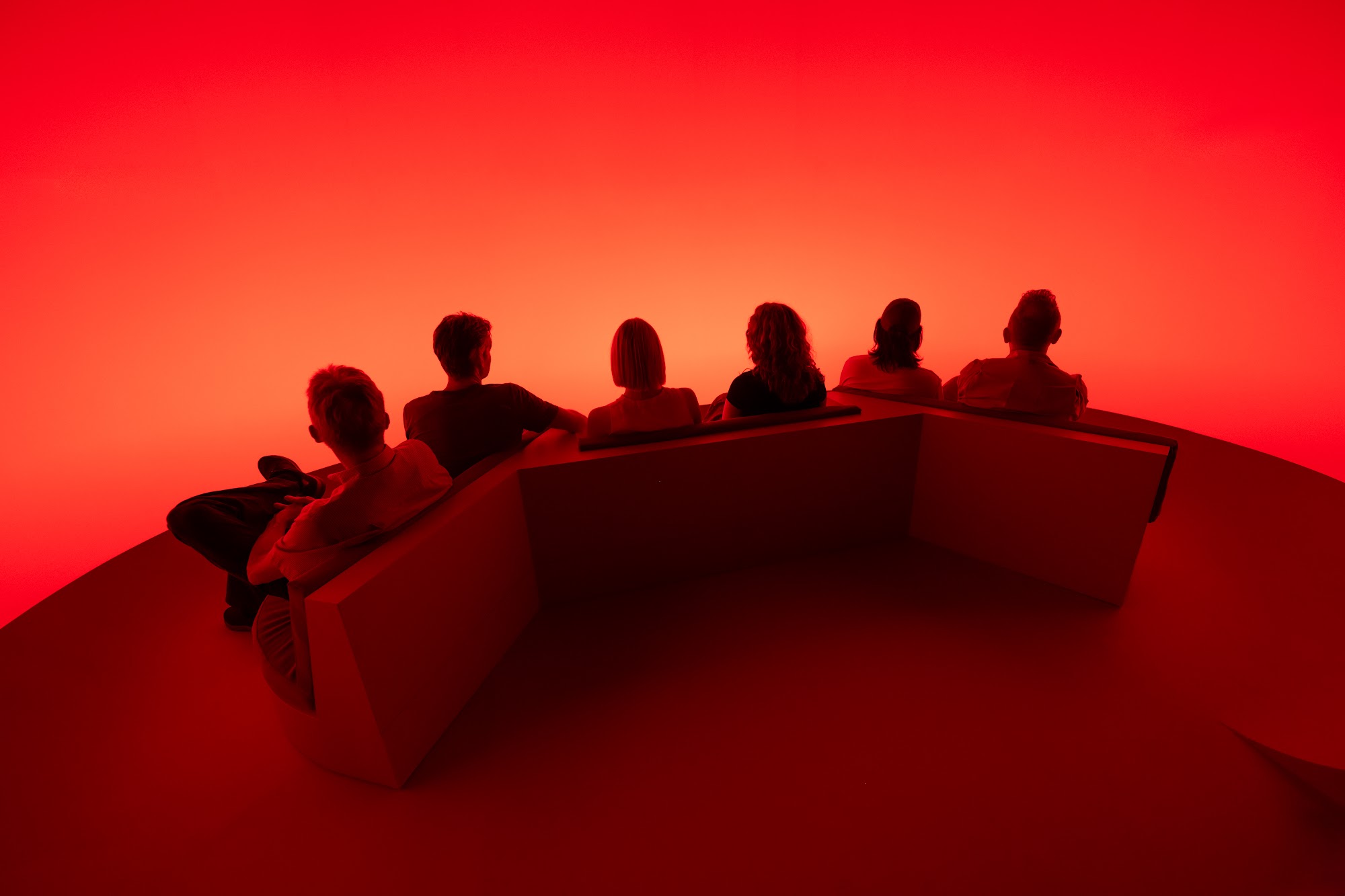
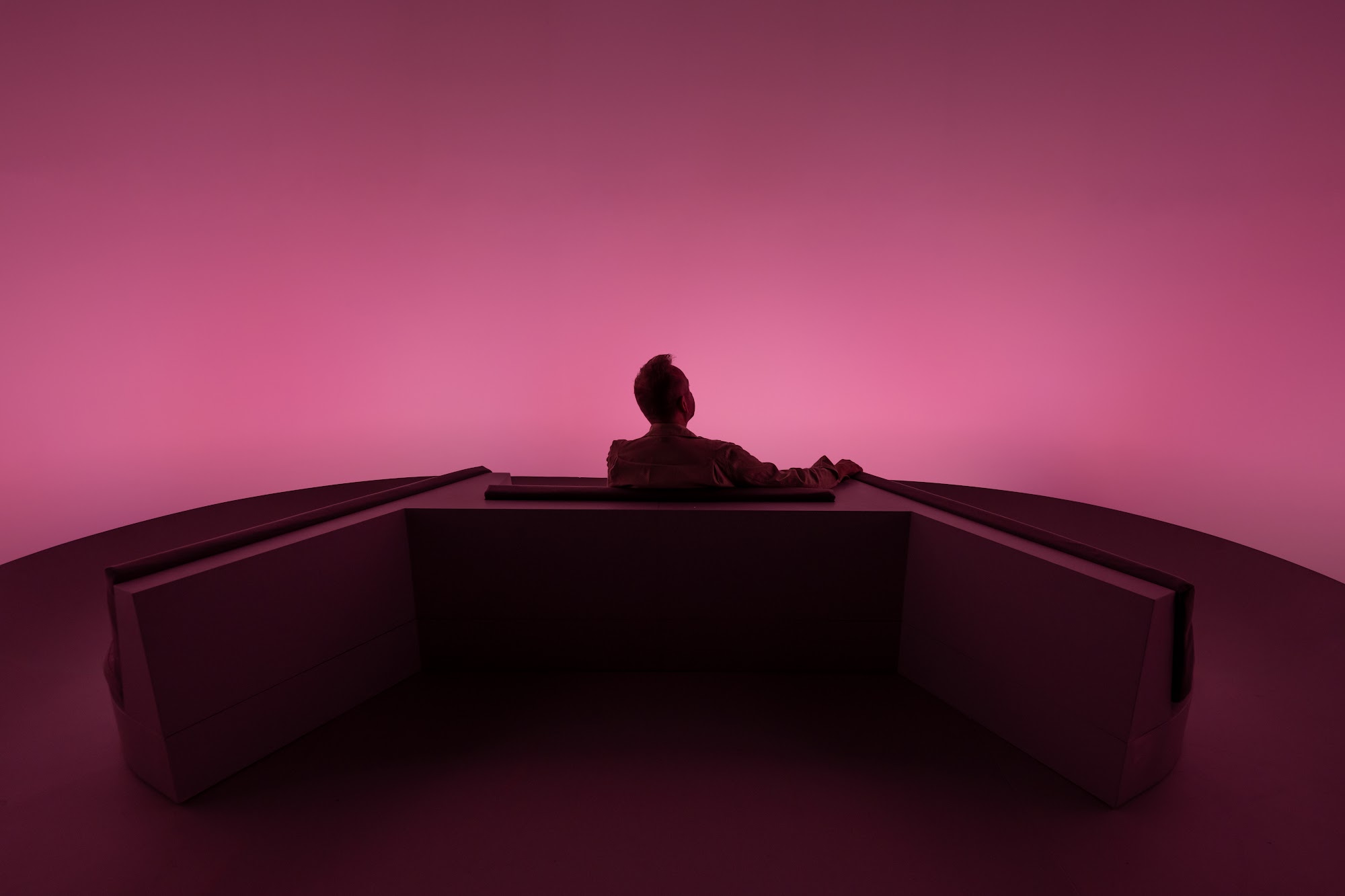
Many of the artists in the exhibition have spent their careers entering this territory from completely different directions. James Turrell is perhaps the clearest example: his work turns light into the subject itself, asking us to become conscious of the act of seeing — almost to see ourselves seeing.
Brion Gysin went further into the interior with the Dreamachine, using flickering light to produce visual phenomena behind closed eyes and deliberately turning the artwork into an instrument for altered perception.
Liliane Lijn has explored the relationship between light, matter, science, spirituality and states of consciousness; her Rites of Passage series was explicitly conceived around transitions between different states of consciousness.
Carsten Höller treats perception almost as an experiment, creating situations in which our ordinary understanding of reality becomes unstable.
These artists are not giving us an image of consciousness; they are interfering with the machinery through which we experience the world.
From the Night Sky to the Body
Then there is the extraordinary scale of the work. Chris Levine’s Higher Power takes light beyond the gallery and projects it vertically into the night sky, turning the heavens into a shared field of perception — asking us to look up, outwards and beyond ourselves.
Philip Vermeulen’s Chasing the Dot does almost the opposite: it closes the distance between the artwork and the body, surrounding the visitor in shifting fields of colour so that perception becomes an embodied, almost hallucinatory experience.
Loie Hollowell brings perception back towards the body and interior experience, while Leo Villareal uses computation, repetition and light to create constantly changing visual systems that never resolve into a single image.
Tomás Saraceno takes us beyond the human altogether, connecting spider webs, vibration, networks and cosmic structures and asking us to consider that there may be other ways of sensing and inhabiting the world. Amanda Feilding brings the question of altered states directly into the conversation.
Together, these practices suggest that consciousness may not be a fixed thing we possess, but something dynamic — something that changes according to what we encounter, how we perceive and where we place our attention.
An Invitation to Experience
And that is why I think the exhibition feels particularly relevant during Frieze week. The conventional art-fair experience asks us to move quickly: booth to booth, artist to artist, image to image, constantly consuming. We wanted to create something almost antithetical to that rhythm.
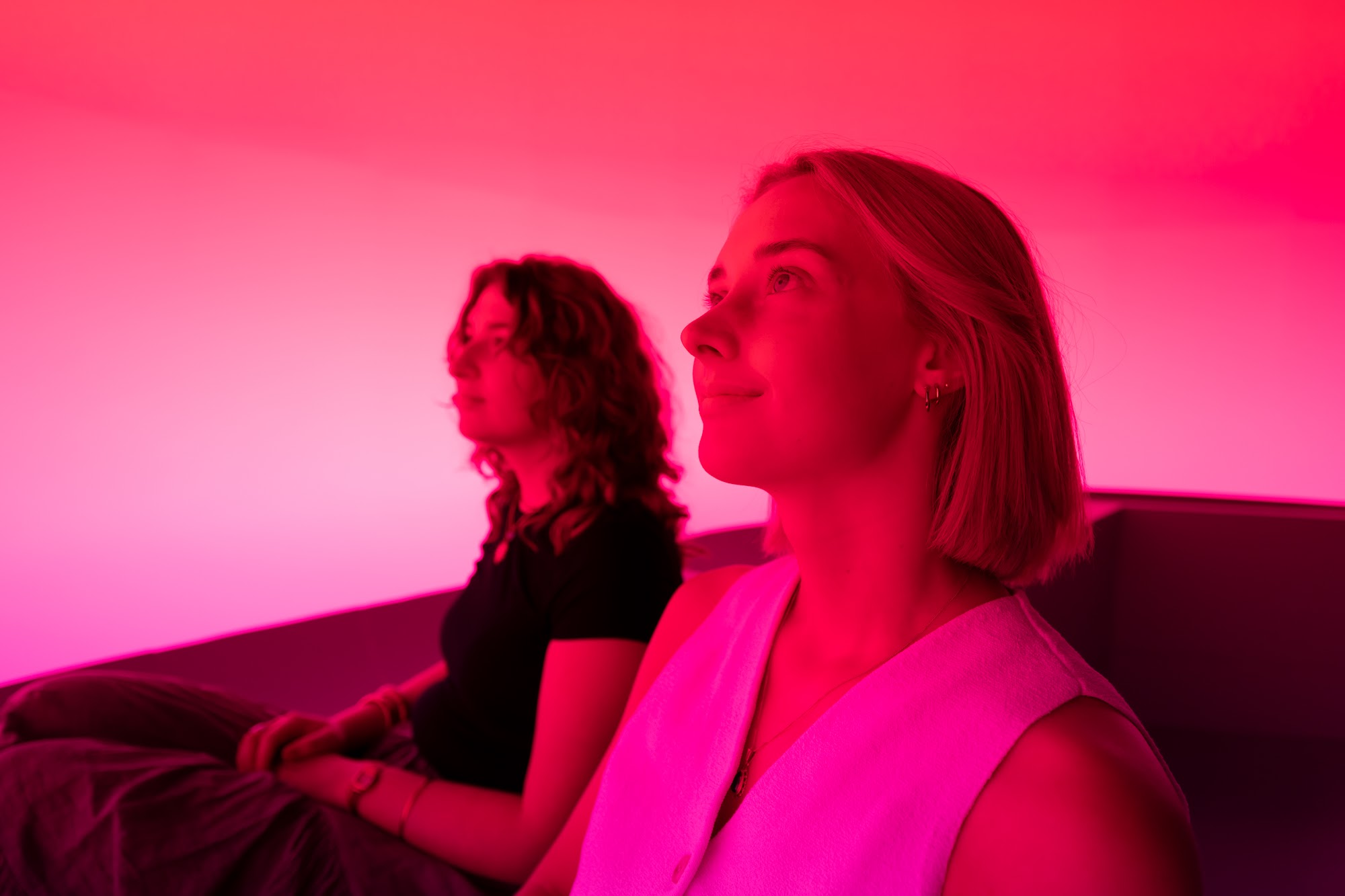
At Town Hall, you don’t simply come to look at a collection of artworks; you enter a world of light, colour, sound, space and imagination. You are asked to slow down enough to notice your own perception — to become aware of your body, your senses, your attention and, perhaps, the strange fact of simply being here.
The Light Eaters is ultimately an invitation to experience rather than consume. In a world increasingly mediated by screens, algorithms and artificial intelligence, perhaps one of the most important questions art can ask is not what a machine can see, but what it means for us to be here, seeing at all.
The Light Eaters takes place at Town Hall by Bottaccio on Saturday 17 and Sunday 18 October.