
When a neighbourhood finds its home
Welcoming the ‘Future of Knowledge’ to Vision Hall. On the ten-year journey of our King’s Cross neighbours, the unexpected breakthroughs that happen when disciplines mix, and building a home for the next decade of discovery.
By Emilie Edberg, Managing Partner
The work that matters most often happens quietly, in rooms you will never read about, between people who rarely seek attention. This is not the glamour of opening nights or the rush of global announcements. It is the patient, persistent effort of researchers, educators, entrepreneurs and community builders who show up, day after day, to solve problems that will not be resolved in a single event or a single year.
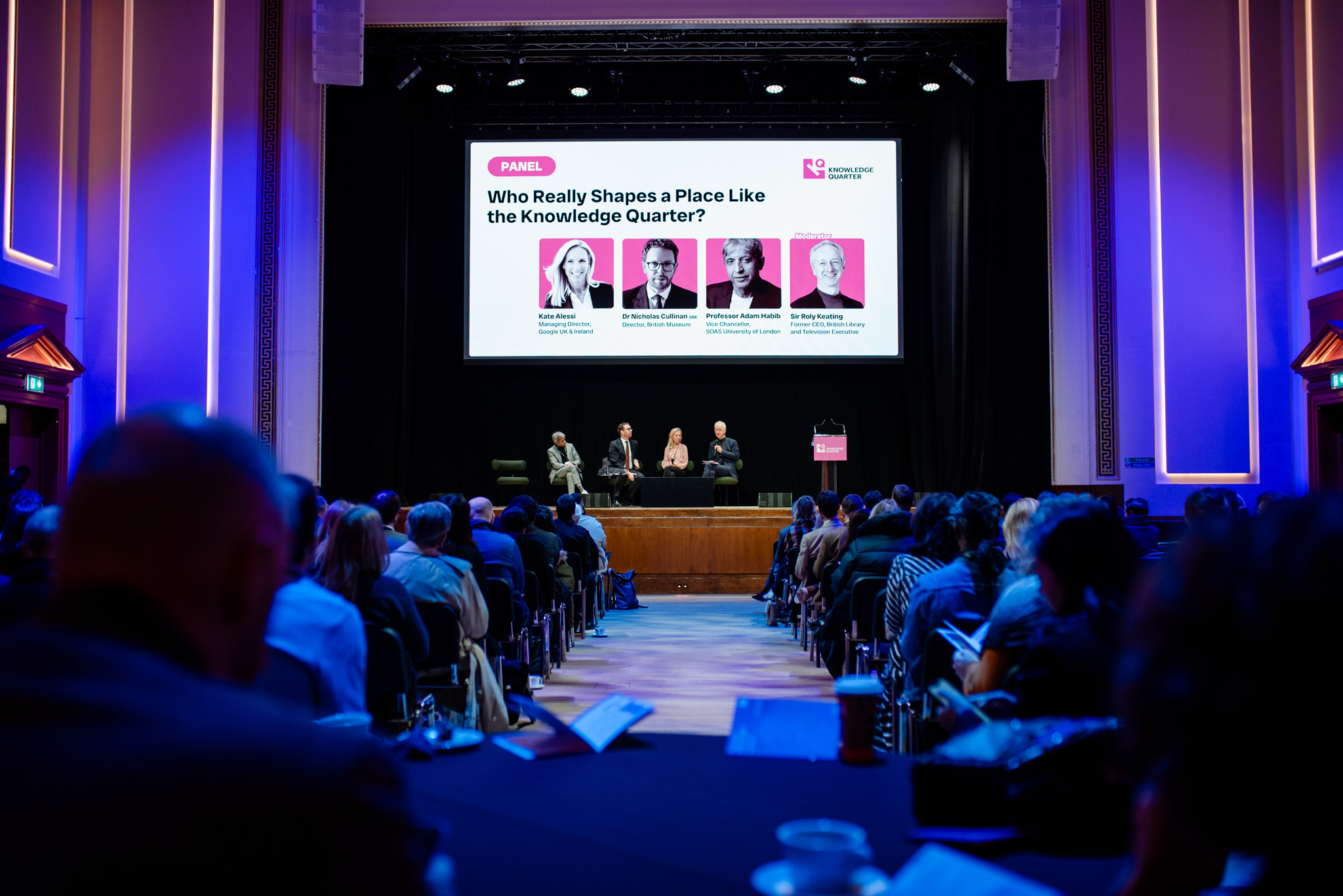
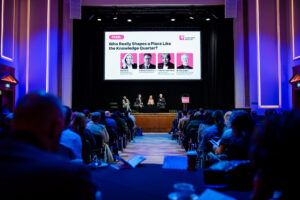
When we opened Town Hall’s doors to the Knowledge Quarter conference last week, we were participating in something that has been building in this part of London for a decade, and in truth, for far longer than that. The Knowledge Quarter is not a marketing concept. It is a living ecosystem of over 70,000 people working across universities, museums, research institutes and cultural organisations, all concentrated within a single square mile around King’s Cross, Euston and Bloomsbury. This is where the British Library holds centuries of human thought, where the Francis Crick Institute pushes the boundaries of medical research, where students and Nobel laureates cross paths on the same streets.
And now, this is where Town Hall sits.
What we owe our neighbours
Since reopening, we have hosted events that brought the world to our doorstep. Prada Mode transformed our spaces into an intersection of fashion, art and cinema, drawing international press and cultural figures from across continents. When NVIDIA chose Town Hall for their summit with Prime Minister Keir Starmer and Jensen Huang, we became part of a conversation about Britain’s technological future and its place in the global AI revolution. These moments tested our building, stretched our team, and announced to London that Town Hall was open for the most ambitious ideas.
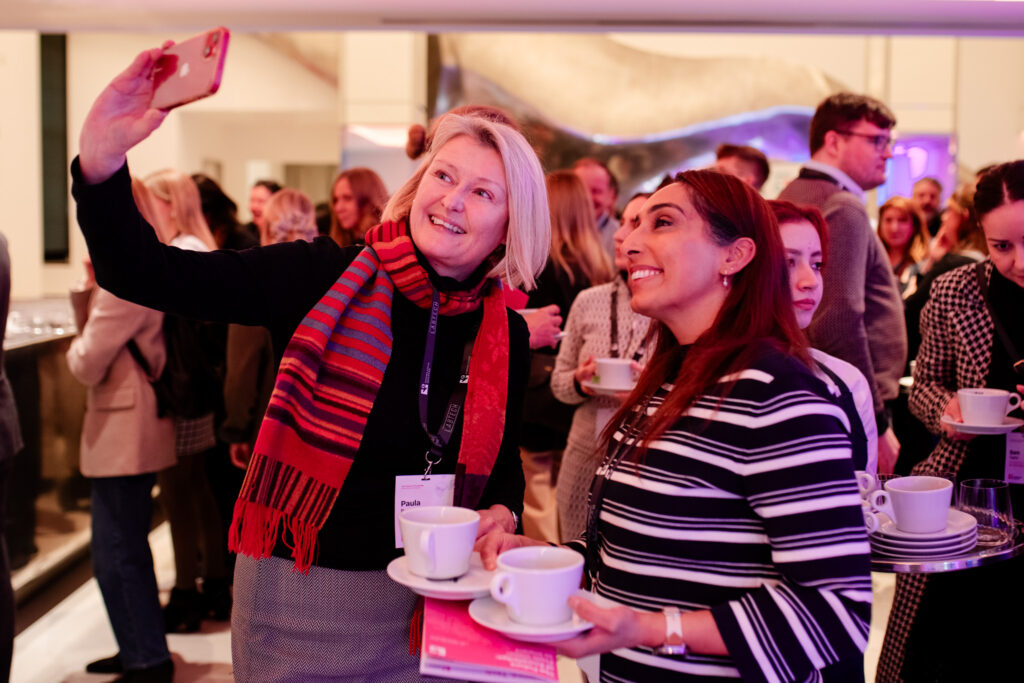
But ambition without roots is just spectacle. A building that only serves the world’s stage risks becoming disconnected from the community that gives it meaning. The Knowledge Quarter conference was our opportunity to host the people who live and work in this neighbourhood, to open our doors not for a moment of global attention but for a day of local collaboration.
This matters for reasons beyond hospitality or good intentions. Town Hall exists because of a ten-year restoration that brought together architects, craftspeople, designers and partners who believed a historic civic building could serve London’s next generation. That belief only holds if we remain accountable to the community around us. The Knowledge Quarter has spent a decade demonstrating what happens when institutions choose collaboration over competition, when knowledge becomes a shared resource rather than a guarded asset. They have earned the right to shape what Town Hall becomes, because they are building the future this neighbourhood will inhabit.
The progression of purpose
There is a rhythm to how a building finds its character. Prada Mode taught us how to hold contradiction, how to let art disrupt the formality of a civic space and turn Vision Hall into something unexpected. NVIDIA showed us we could support the weight of history being made, that Town Hall could be trusted with moments that matter on a global scale. Each event has been a test, a provocation, a chance to discover what this building can hold.
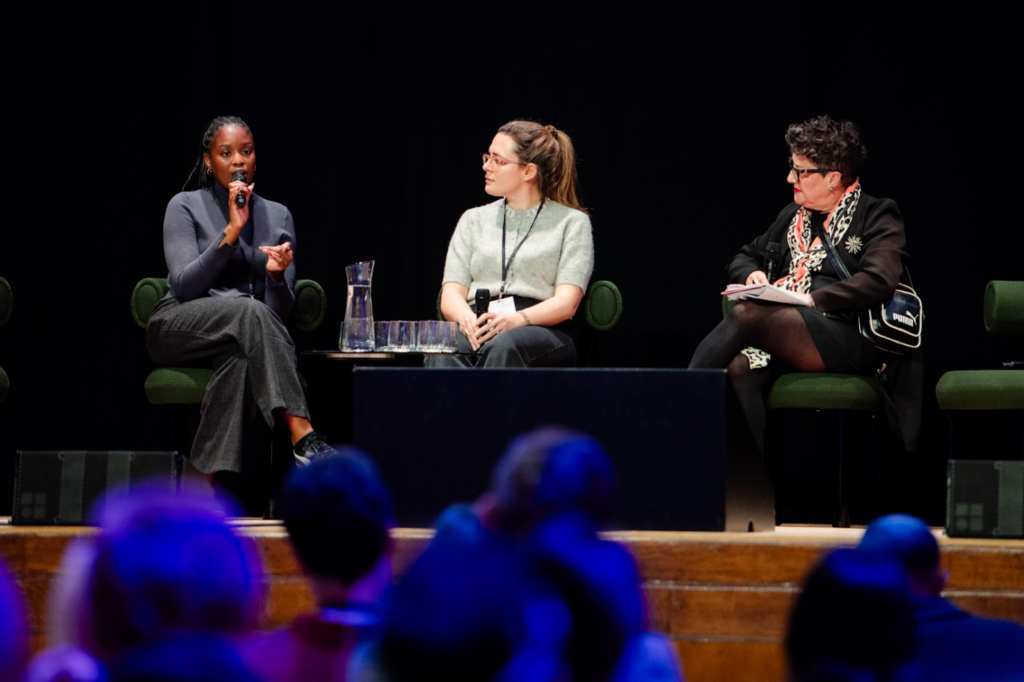
The Knowledge Quarter conference was a different kind of test. Not scale or spectacle, but intimacy and accountability. Could we create space for researchers from UCL to connect with entrepreneurs from Camden startups? Could policymakers from Islington and university leaders from across the Quarter have the difficult conversations about AI ethics, public health education and inclusive growth that this moment demands? Could Town Hall feel less like a venue to be rented and more like a home to be shared?
The answer, I hope, is yes. But the real answer will emerge over time, through the relationships we build and the trust we earn. The progression from global events to local gatherings is not a step down in importance. It is a recognition that both matter, that each makes the other possible. We cannot serve the Knowledge Quarter community if we do not understand what world-class institutions require from a space. And we cannot claim to be part of London’s knowledge landscape if we only open our doors when the cameras arrive.
The work continues
At the end of the conference, several attendees asked what comes next for Town Hall. The honest answer is that we are still discovering that alongside you. Town Hall Presents and Town Hall Society will add year-round programming and membership, creating more opportunities for the knowledge community to gather, debate and create. But the foundation of everything we build must be this: a commitment to serve the neighbourhood that surrounds us, to honour the institutions that make this part of London extraordinary, and to remain humble enough to know that our role is to enable your work, not to overshadow it.
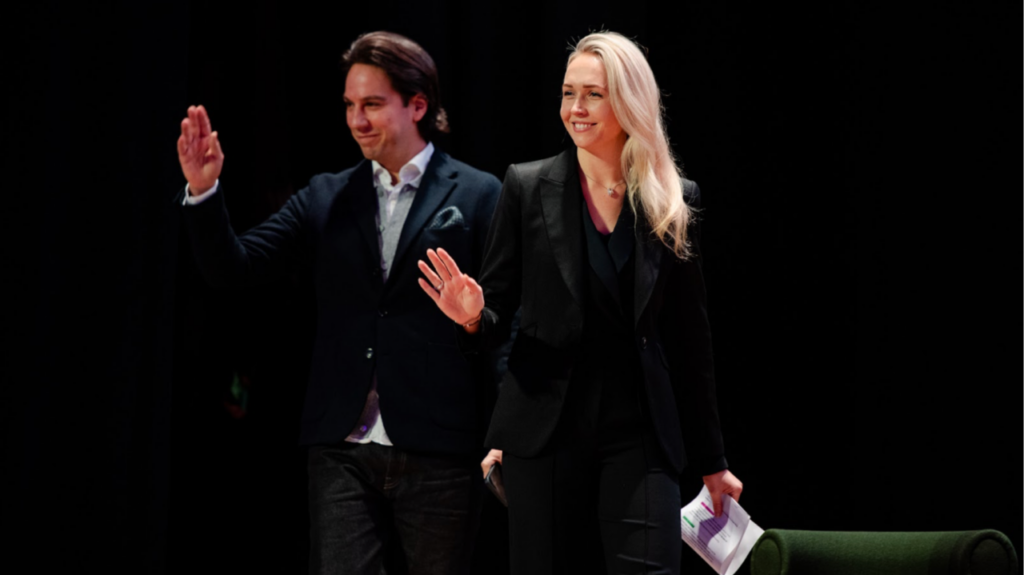
The Future of Knowledge conference was not just a celebration of the Knowledge Quarter’s ten years of collaboration. It was a reminder that the future is built by people who show up for the work that matters, in the rooms where it happens, day after day. We are honoured to provide those rooms. Your home is here.
When a neighbourhood finds its home
interested in more like this?
Sign up to our newsletter for the latest.
Sign up