A subterranean space reawakened. We look back at the inaugural Mirror Mirror salon that brought artists, academics, and neighbours together under Portland stone, and forward to what collective reflection means today.
The Magic and Power of the Reflective Surface
By Romy Westwood, Director of Membership
Mirrors have been in existence for nearly as long as humankind. The earliest hand-made mirrors are recorded from 6000 BCE as polished obsidian found in Anatolia (modern-day Turkey) and Mesoamerica (central Mexico to Central America).
Though mechanics have slightly changed over centuries, simply put, a mirror is a reflective surface that has as much practical use as it does in provoking philosophical thought. It is a constant through time, and central to every aspect of human history: archaeology, art and literature, technology, optics and science, psychology, and style.
The first chapter of Michael Petry’s ninth book, Mirror Mirror, The Reflective Surface in Contemporary Art, opens to review the symbolism of mirrors on art through history. From the use of a convex mirror in Jan van Eyck’s 1434 intricate painting Arnolfini Portrait, to Diego Velazquez, Venus at her Mirror c.1650, Manet’s, A Bar at the Folies-Bergère, 1882 and René Magritte’s works of the 1930’s. The book captures how mirrors appeal to more than just human vanity but are objects of magic, transformation and power.
Contemporary artists feature works where the mirror reflects moments in time: of landscape, of perception or distortion, of relationships between self and viewer. The last chapter highlights times we now live in and of the ubiquitous ‘selfie’, using the technology of a smartphone, a primary means of communication and virtual connection, to display obsession with ourselves, our ego, and our insecurities.
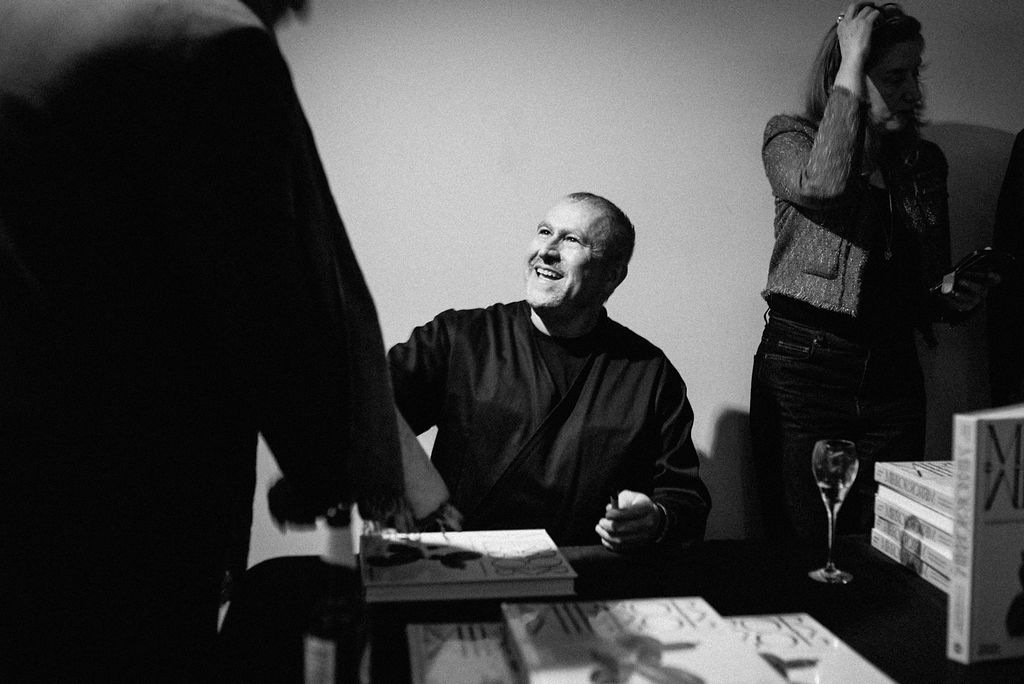
A moment of exchange with Michael Petry
Awakening Inner Space
In celebration of the book and the talent featured within it, Town Hall Presents hosted its inaugural artist salon on Thursday 26th February 2026 in Inner Space, the newly renovated underground venue of the old Camden Town Hall. St Pancras Town Hall (as it was formerly known) opened in 1937, the same year René Magritte painted Not To Be Reproduced, depicting a man standing before a mirror that fails to reflect his face, and Disney’s Snow White and the Seven Dwarfs was released, where the Magic Mirror only speaks poetic truth to the evil queen.
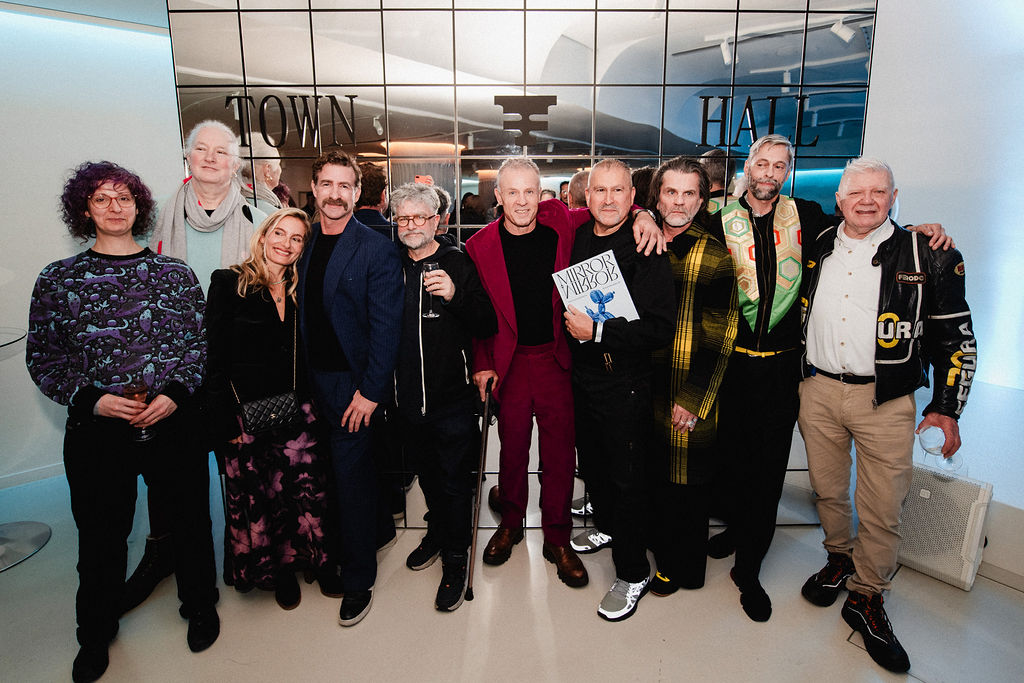
The artists behind Mirror Mirror: The Reflective Surface in Contemporary Art
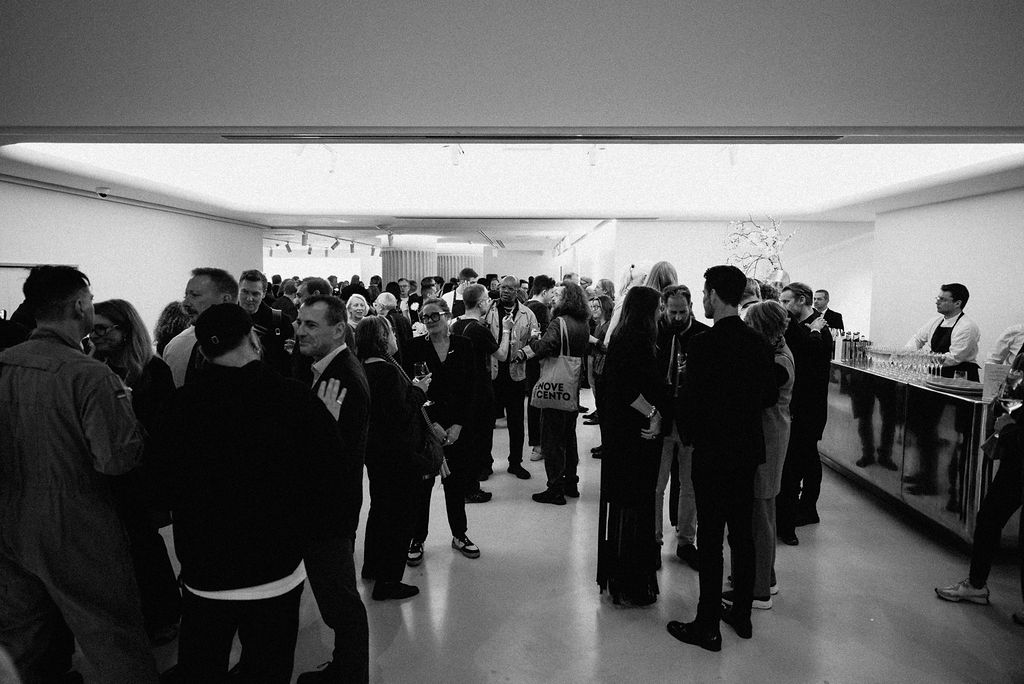
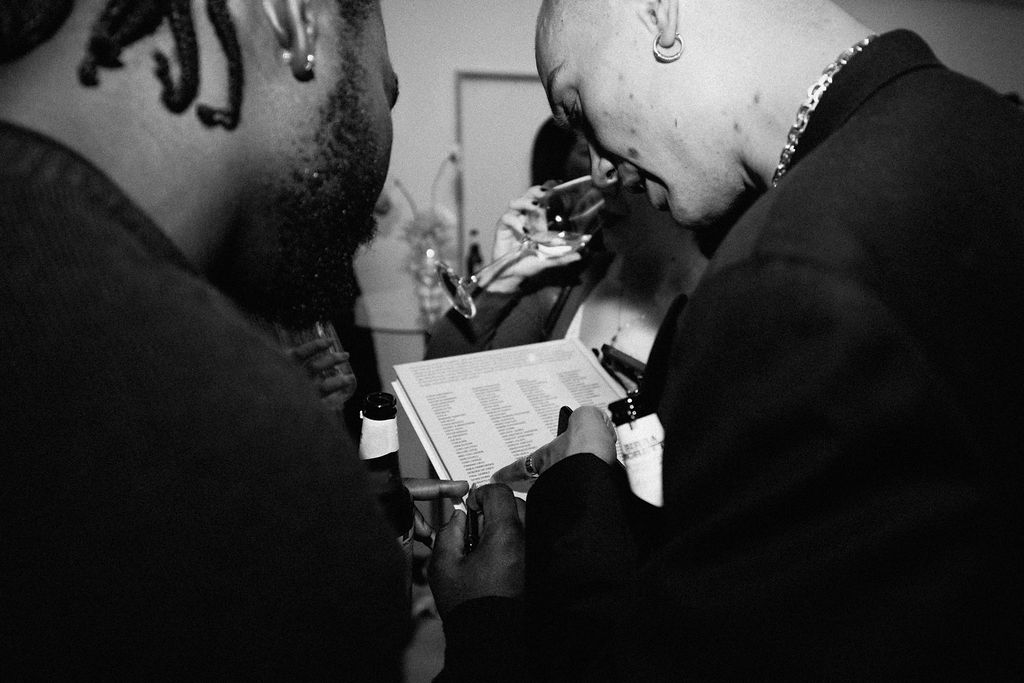
The doors of the Town Hall finally open once again, welcoming the talent featured within Michael’s book and honouring its nine decade history where the building was a leading national centre for the arts as well as home to swathes of political, civic and social activity. The underbelly of the Portland stone walls joyously hummed with voices of acclaimed artists, photographers, dancers, poets, curators, collectors and critics alongside policy makers, academics, entrepreneurs and students meeting each other for the first time against vinyl records playing.
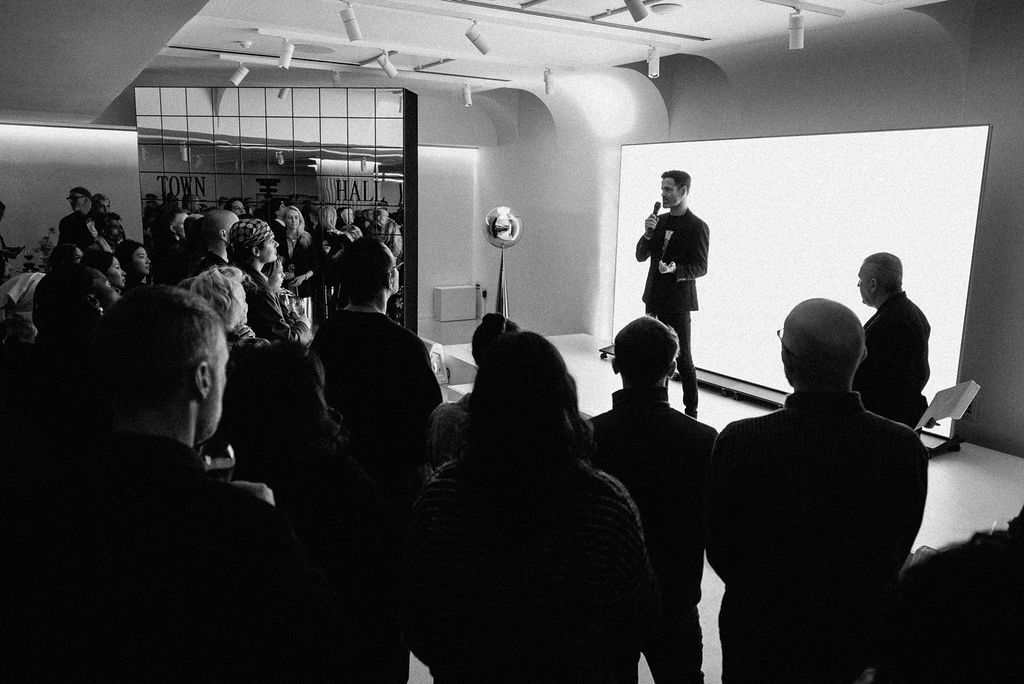
Director of Programming, Michael J Harris, sets the tone for the inaugural salon, welcoming a new society of creators
Echoes of Conflict in a Connected World
36 hours after this commemoration, we woke up to news of another war waged in the middle east. What became of a vibrant evening of brilliant creators from differing backgrounds and industries revelling in one another’s ideas, energy and conversation, was brought back to reality with a personal reflection of history repeating itself and an overbearing query about how actions of the individual, hard power or otherwise, can make for such significant impact and subsequent change to other people’s lives and the world we live in.
As a young adolescent, I was evacuated from Bahrain during the Gulf War in 1991. News of explosions in the region brought back stark memories of a time when pen and paper, terrestrial TV, the radio and a dial-up telephone were the only key ways to communicate across long distances. Preceding the internet or smartphones, connection and communication was slower, scarce and sacred. A time where meeting face-to-face was fundamental and there was no immediacy of a ‘selfie’ unless one used the likes of a polaroid camera, painted a self-portrait or popped into a photobooth.
With this, it is remarkable to me that our first inaugural artist salon based on a theme of reflection, was held in a space that once housed an archive of the Borough’s social history for close to 100 years. We were all wrapped within the foundations of a majestic building that opened at the height of the Surrealist movement (1924 to 1940), the basement of which shortly after then served as a vital community sanctuary of safety, providing an air raid shelter to Londoners during the Blitz (1940 to 1941) of the Second World War.
Sculpting a Sanctuary for the Extraordinary
Periods of war through time bring people closer together, out of necessity, survival and shared values, but also the underlying principles of love, compassion and the need for human connection. The artists and people that came together for Mirror Mirror in Inner Space, that once same bomb shelter, continually breathe ideas, challenge perceptions, dream to make realities concrete. It marked the start of a new archive of life we are collectively creating at Town Hall and the intentions of the community that make up its Society.
It came about by the meeting of good people from different walks of life doing extraordinary things: Creators. At the time of meeting, the Town Hall’s basement space was a building site. The Founders had a vision for Inner Space that acknowledged the rest of the building’s past but looked to the future. Curiosity conceived the event and the theme segued in timing with the now finished space which worked so elegantly to amplify the concept of the book and the talent of the people within it.
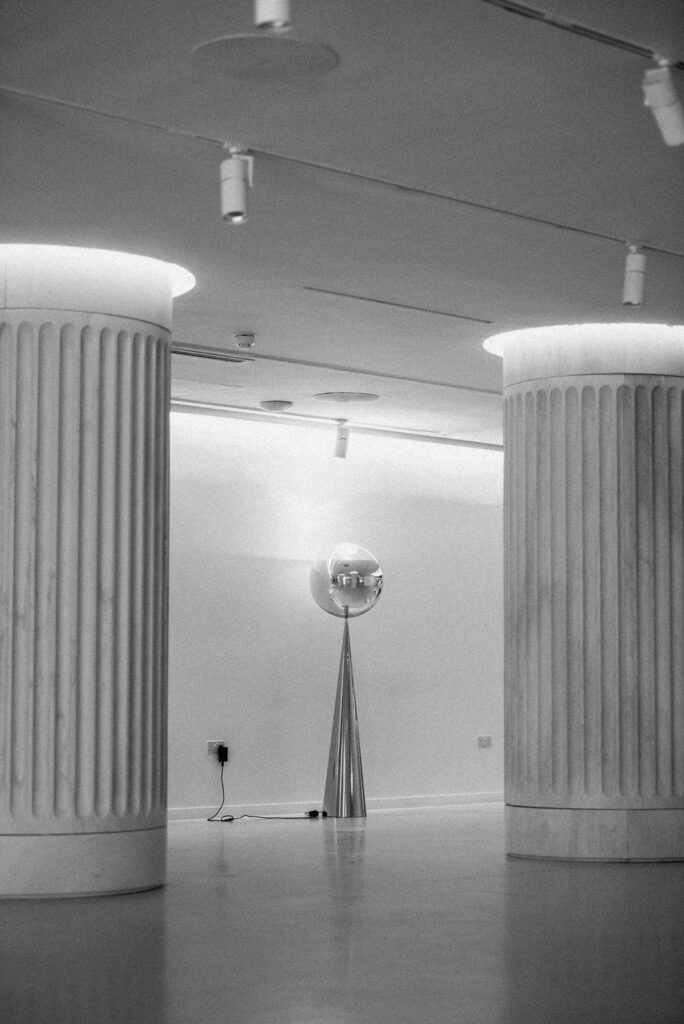
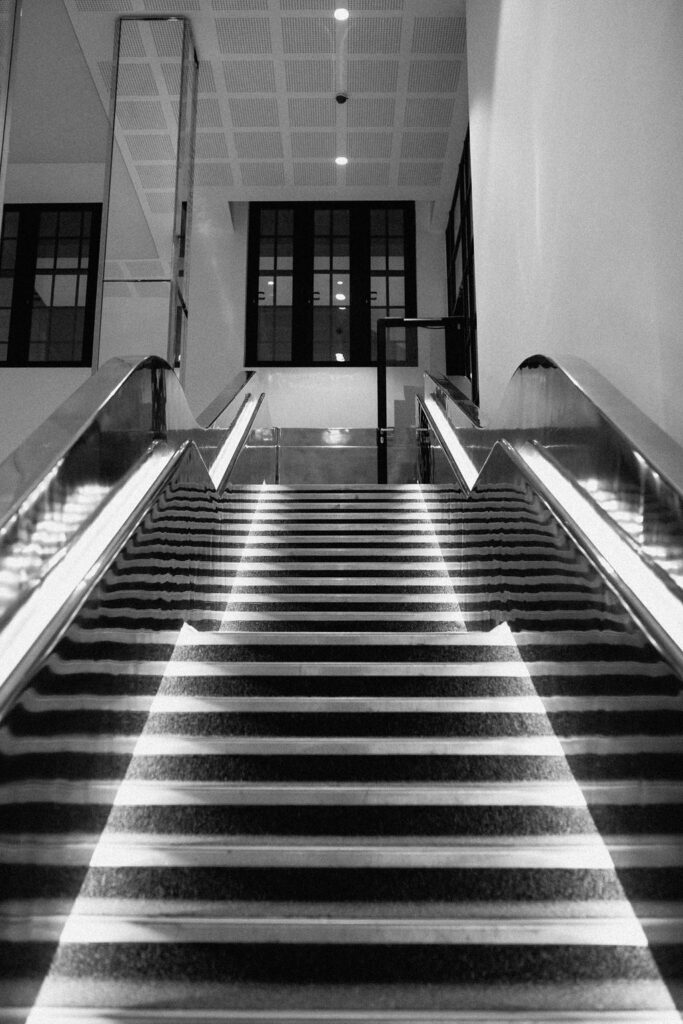
Inner Space is beautifully designed with tactile materials, craftsmanship and reflective surfaces: mirrored pillars, a flowing pewter staircase, two vast lightwells that pierce up through all floors and a series of fluted, honed marble columns, the stone of which came from the same quarry Michaelangelo sculpted David. An intention of design and humanity that harnesses the building’s legacy and projects a new version of what a Town Hall represents into the future. That evening, the Mirror Mirror salon ignited a harmony of history and people bringing a space to life on a stage for the extraordinary.
Honed marble columns sourced from the quarry of Michelangelo’s David anchor the tactile, Tom Dixon designed aesthetic of the room
The flowing, monolithic pewter staircase invites guests into the sanctuary of Inner Space
A Society Beyond the Looking Glass
The individuals that made Mirror Mirror’s artist salon such a unique, refreshing and profound evening was the beginning of something new, something we’re all hungry for. A foundation for a community that inspires each other, that feeds off the exchange of curiosity and thought, energised by a platform and forum to share knowledge, and most importantly, individuals who want to contribute to the world around them as much as what they’re looking to get out of it.
Whilst we now live in a digital world of fast-changing technologies, new wars and virtual realities, throughout history there are two constants that remain fairly unchanged in being: the mirror and us.
Common to us all is the looking glass. This humble yet remarkable object, used daily as a given with little further thought that has been ever-present through time. Woven into the world, it has presented extreme opportunities through exploration and innovation across all realms; continuously impacting the development of human existence in the biggest and smallest ways: invention, technology, space, art, society.
Town Hall Society is rooted in the essential principle of human connection. Made up of the individual that collectively encourages a community through personal interaction, their own self reflection and outlook. Yet, not a like-minded group of people wanting to connect because they have commonalities that become tribal. Quite the opposite. The Society is made up of those from different disciplines and generations cross-pollinating ideas, and those who seek connections for new learnings to further advance their own vision. Those who collectively become greater than the sum of their parts. Those who look back, to look forward. Those who harness reflection every day to create their future.
Mirrors have forever reflected the individual, and by turn should reflect the community we want to be a part of. Town Hall’s first artist salon was no exception to this. The building stands as a reflection of the society we all contribute to. It is for the creators, the doers, the dreamers. Step through the looking glass, welcome to The Society.